Disembodiment and the Concept of Meaning-Adjacence in Comics About Psychosis


I started drawing cartoons around 2021, during Covid, when I was floridly psychotic. I have schizoaffective disorder, and in 2020 I decided to stop taking medication, after a religious experience (read: manic experience) that led me to believe i was healed and did not need medication anymore. At that point I was already inconsistent with my medication-taking, and my meetings with my psychiatrist were irregular, owing to an illness she contracted.
I was living in Cleveland, OH, then, but moved back to MI, at which point I started to explore, while psychotic, art forms other than poetry, the form I was most accustomed to. I wrote songs, and even came out with an an album of music, but I also bought a notebook and started to draw in it with colored pencils. I think this decision was prompted mainly by the changes in my senses brought about by psychosis, and the way my eyesight in particular, or the vividness of the world, became more vivid and intense. I wanted to somehow communicate this, although I had anosognosia, or lack of insight, and so could not have articulated my desire in those words then. I wrote and drew quite a lot, in a process my friend has called justly "psychotic work," and these writings and drawings and comics were often chaotic. Later in the year I bought an I-pad, and started to use Procreate to draw.
Here are some drawings and writings and comics from that time:


I was trying to communicate the content of my psychosis, which involved a kind of cosmography. I was a religious figure, who could read the thoughts of others. (This was in reality a form of thought broadcasting.) I was meant to battle cosmic evil forces that threatened my autonomy. I was also constantly imagining that I was wrestling with different artistic traditions and somehow revising them through my aesthetic choices. I was hearing voices, and interpreting them as the spirits of dead artists, so the idea that I could revise tradition was quasi-literal. I was also obsessed with the idea of protecting an imagined person from harm, and that shows up here as well.
Notice that I was trying to communicate my psychosis, but I wasn't doing a good job. The drawings lack context. In that sense, they are what I want to call meaning-adjacent. By this I mean that they come from a place - psychosis - of enormous meaning, but this meaning is not totally shared. I am trying, while psychotic, to communicate something, but in an ontological sense I am mute - I don't know I am psychotic, I have anosognosia, and can't see the psychosis clearly enough to communicate it.
When I forayed into narrative comics, I took this ontological blindness, this world-blindness, this meaning-adjacence, and unknowingly placed it front and center. For I made a comic about being illegible, and therefore unintelligible, and therefore about meaning-adjacence. Here is an excerpt:


"The strange indecipherability of my features, you see,

is merely the beginning of a scheme

a scheme....to make the visual world asemic!!
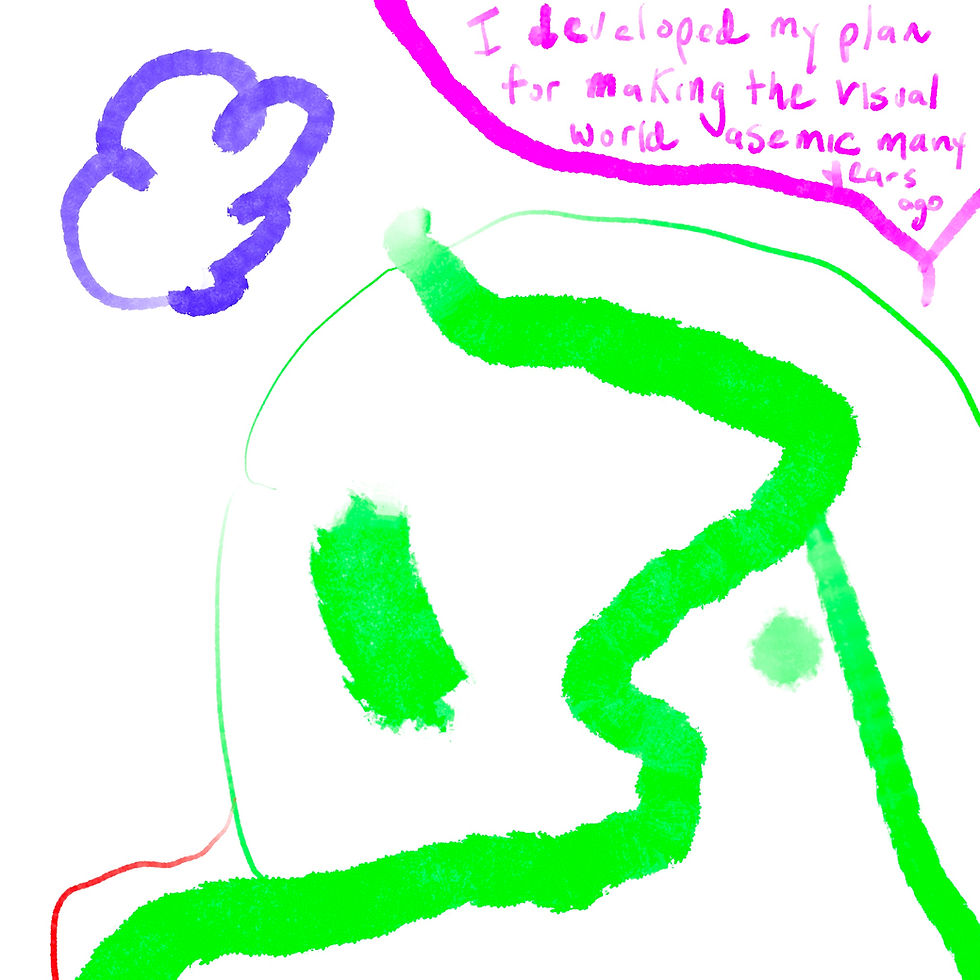
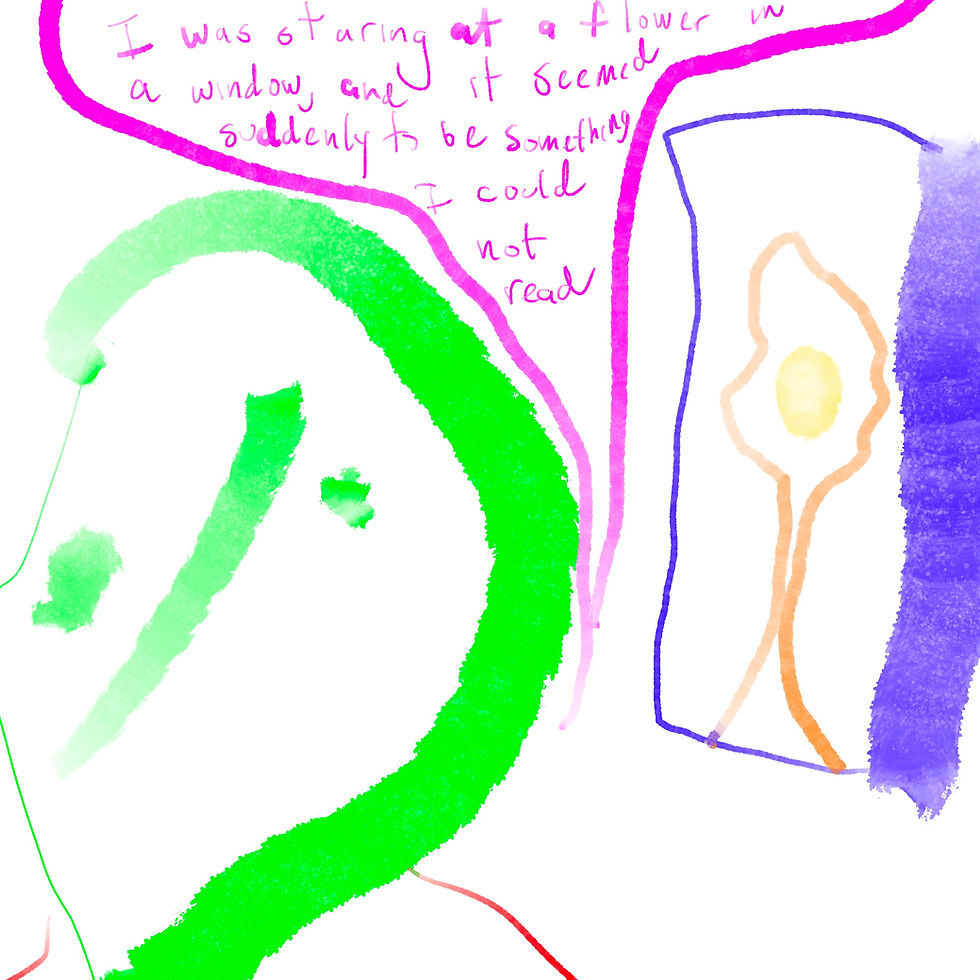


The protagonist, whose face is hard to read, desires to make the visual world asemic. He wants to collapse signs into senselessness, he wants to make what we see hard to see, hard to read, hard to interpret or understand. Why? He cannot read reality correctly, but he can't say this. So he wants to make the world illegible, so that other people might share in the unsharable way he is experiencing the world. That is his attempt to communicate his psychosis in a meaning-adjacent way.
It is meaning-adjacent in part because psychosis is not a language, even if it has rules and grammar. Psychosis is an illness. And so language can gesture at it, but cannot communicate it exactly or totally. If you say "the same is true of anything in the world," I'd say "no," because psychosis often carries the additional burden of anosognosia. If I describe this placemat in front of me, for example, I will not be able to capture it totally, because it is infinite. Its suchness overflows language. But if I describe this placemat while I am delusional, it is even harder to get at its aspects - for in psychosis, I would argue, we are at a further mimetic remove, and not a closer one.
*
My psychotic episode lasted three years. When I began to recover, after five hospitalizations, I started to try and draw about it. Here are some examples:
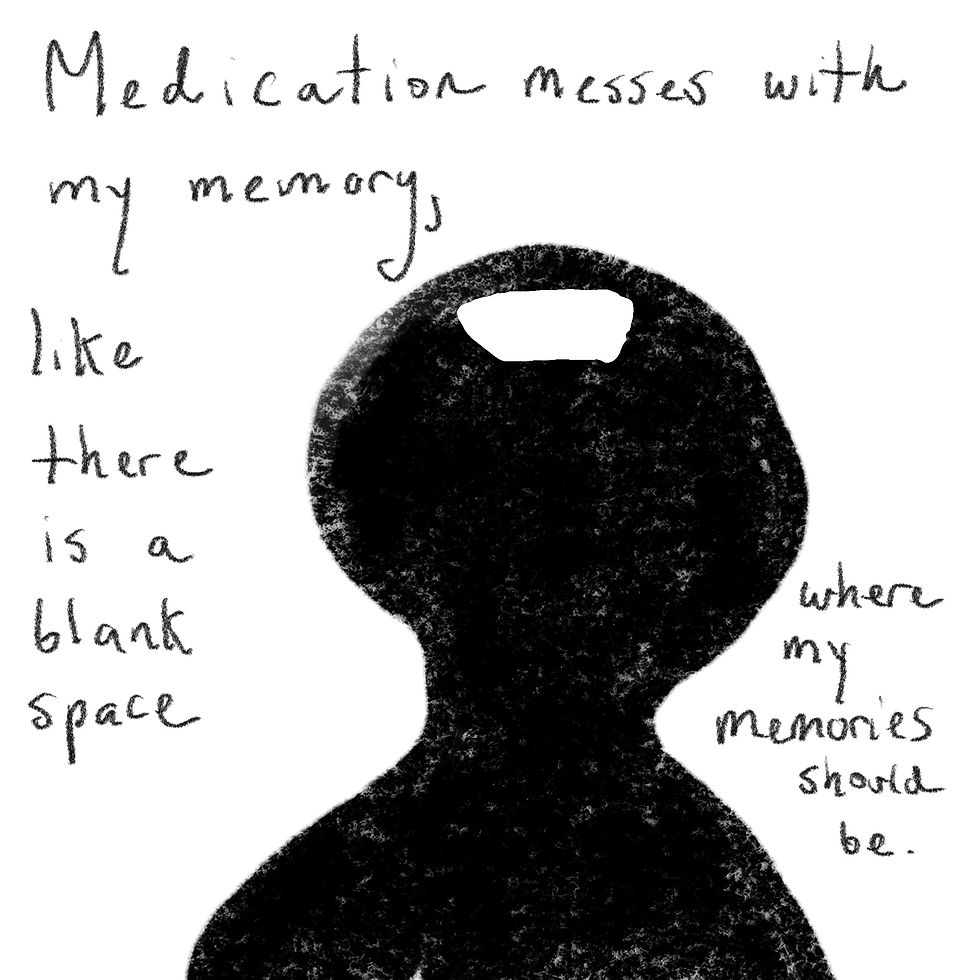


I think, when I began drawing after my hospitalizations, that I had a kind of tacit philosophy, that I gleaned in part from Hanz Prinzhorn's Artistry of the Mentally Ill, and part from 1960s Bob Dylan. I wanted to communicate an intelligent anti-technique, because technique suggested mastery, while the lack of any training or education in drawing lent the drawing a kind of visceral urgency, I felt. "I can't draw, but this is too important not to draw," they seemed to say. And I felt this, that they needed to be drawn. Madness, of course, is located somewhere outside technique, in the sense that, with anosognosia, it is not totally conscious.
But within this willed sort of naivete was also something deeper - an awareness that it was the combination of words and images - and no other way, for me - that I could most successfully communicate my psychosis. Comics were a kind of saving force for me in that sense. They were my form, are my form, more than poetry, more than music.
So after these hospitalizations I started to draw a lot. And as I did, I developed a visual vocabulary. What I want to end with is that visual vocabulary and its relationship to psychosis. I want to highlight four aspects of my comics that I believe get at psychosis from a meaning-adjacent perspective. Those are:
The absence, mostly, of dialogue
The absence, mostly, of setting
The preponderance of narration and the only occasional dramatization of situations
The reliance on abstraction in terms of color and shapes
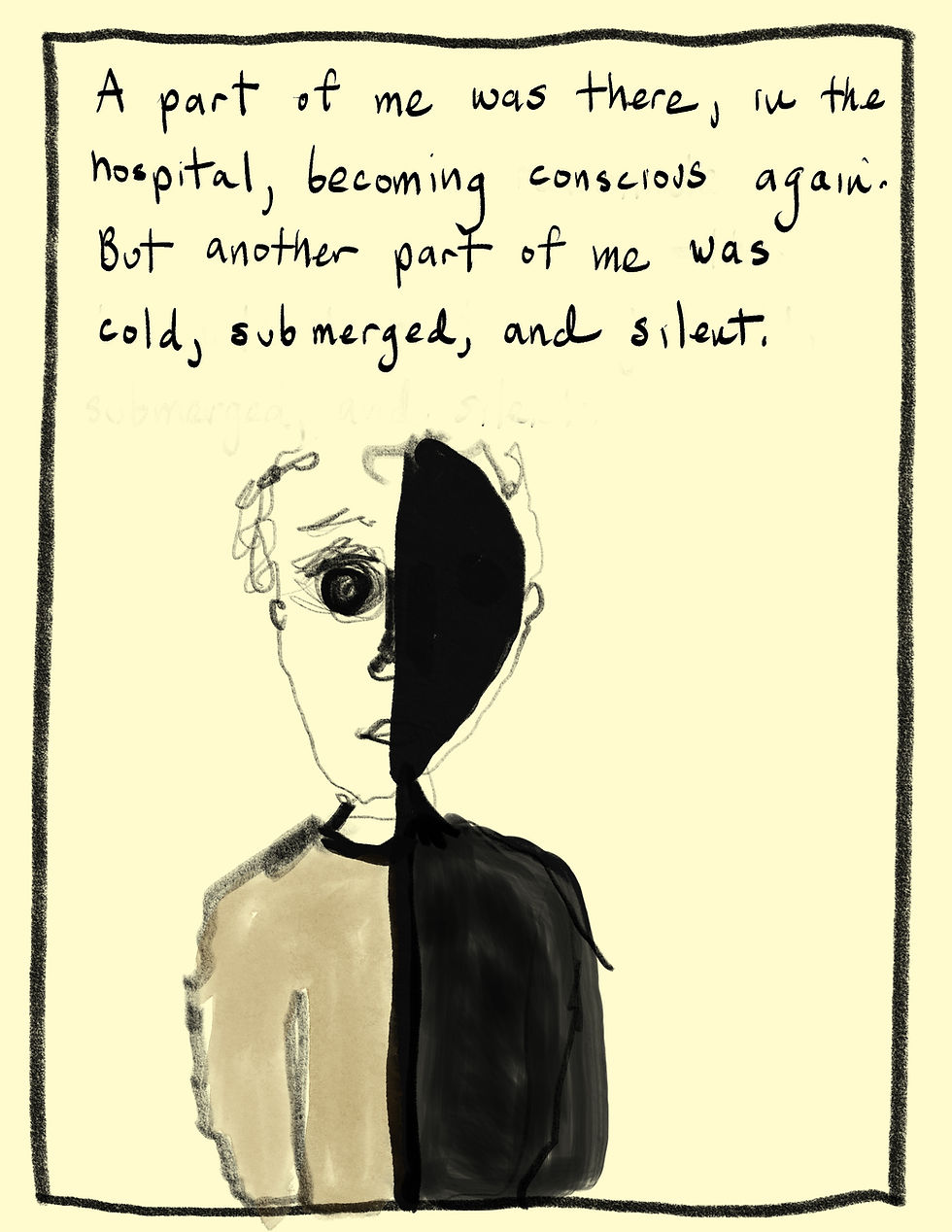
Here is an excerpt:



And here is another excerpt:

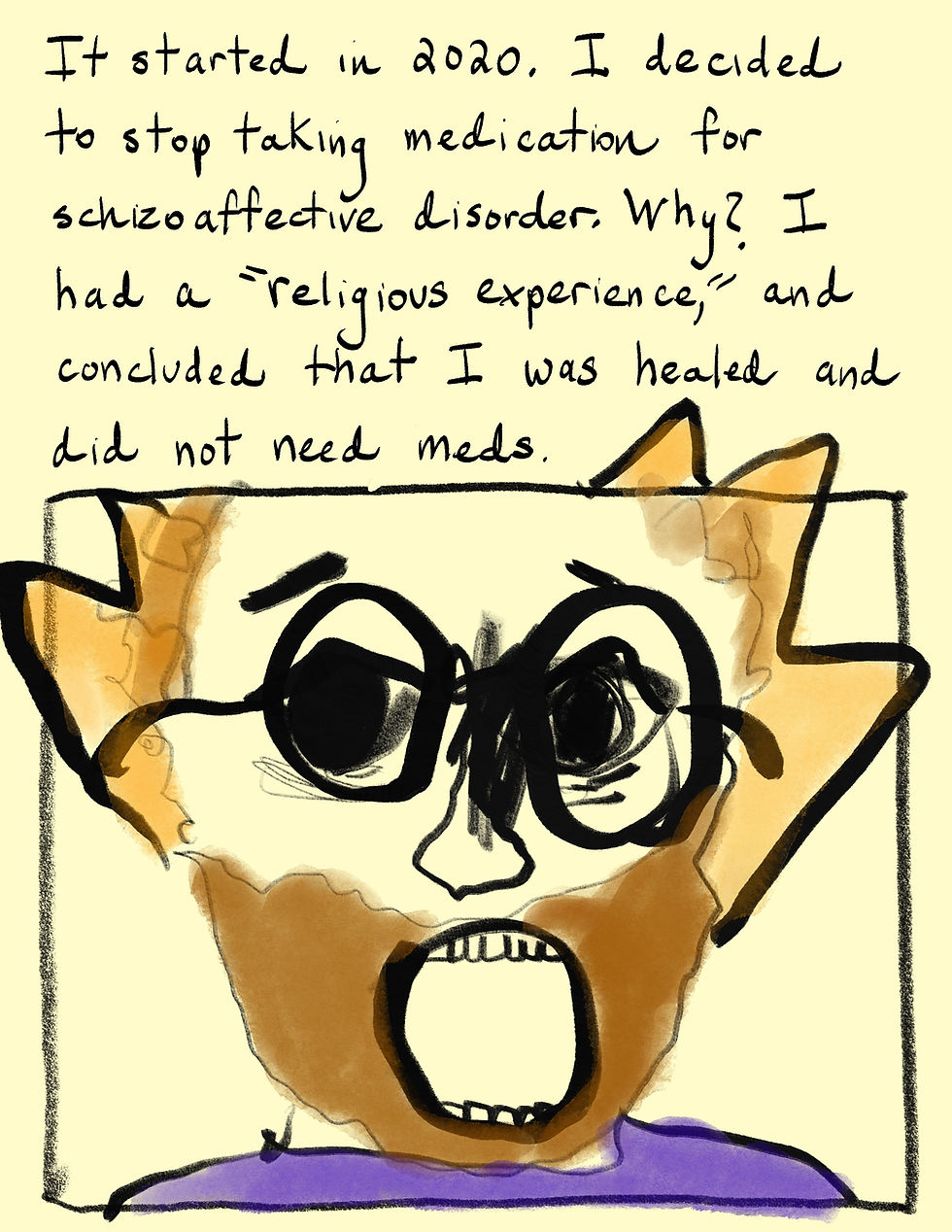

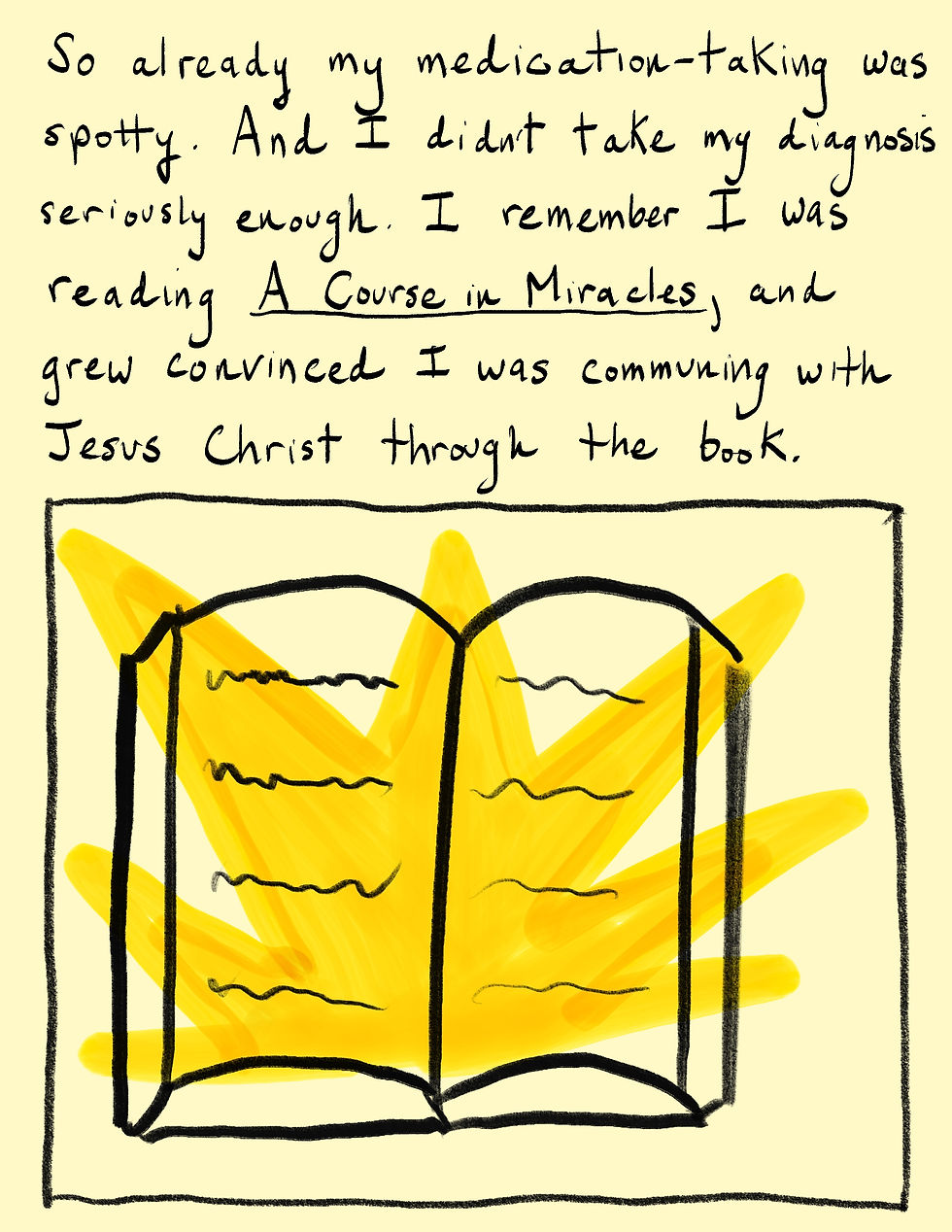

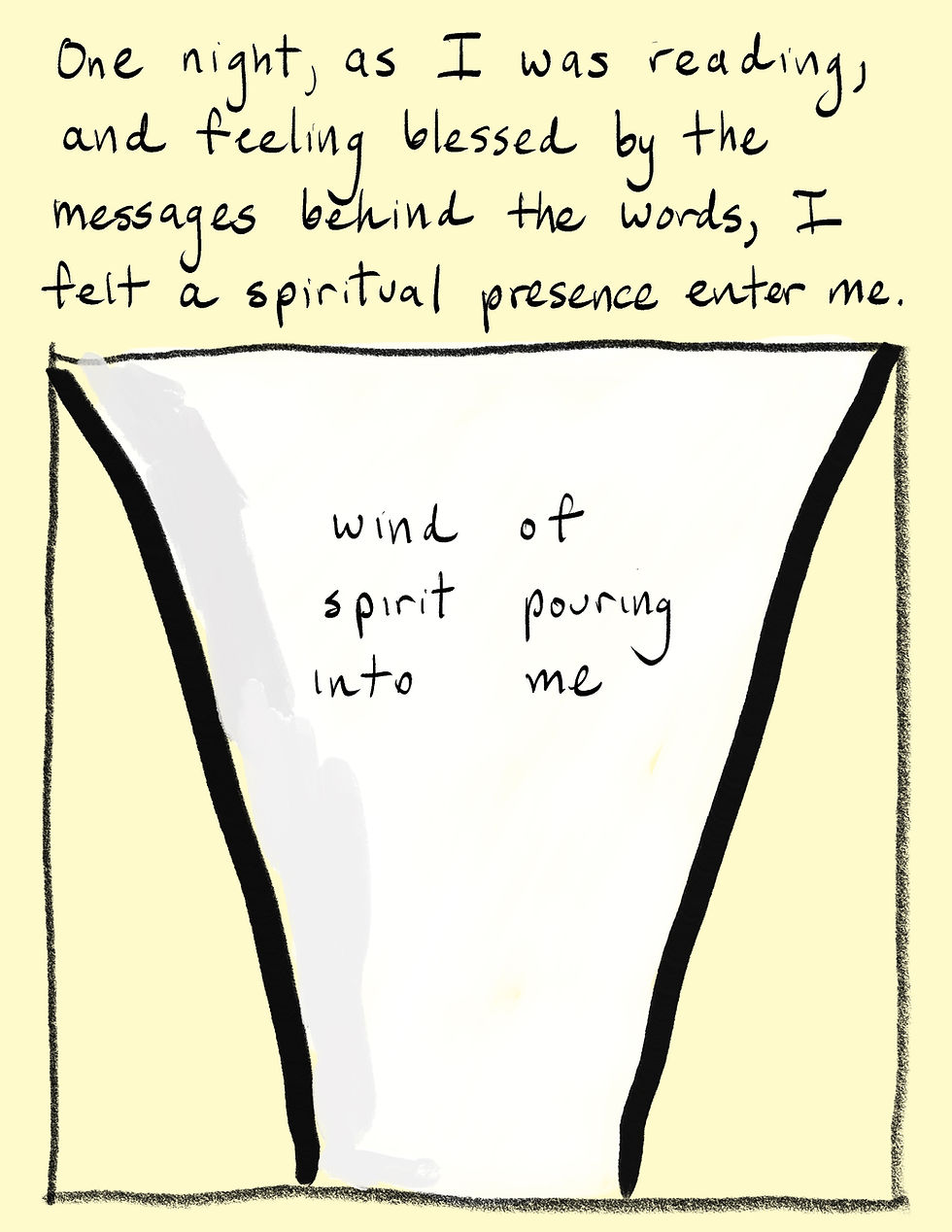


The comics have a kind of monological, disembodied quality to them. In that sense, I think they are constantly alluding to psychosis but in a meaning-adjacent way. Psychosis is what the comics are about, but it is also embedded in the how of the comics, their way or manner of speaking. They represent this disembodiment through both the mostly absence of setting, the hyperreflexivity of the narration, and the reliance on abstract shapes rather than physical objects to convey meaning. Only rarely does the comic employ dialogue, and when it does, it is for highly charged scenes, like this one:


Dialogue, of course, is what psychosis contravenes, because of the solipsistic nature of the illness.
But while they employ little use of setting or dialogue, there are a lot of faces. Why? I think faces in my comics are like anchors that keep us grounded amidst the rampant disembodiment. There is so much narration, so much abstract colors and shapes, that faces seem to tie us to reality, to what is going on. I struggled, especially around the time of the last comic excerpted concerning the therapist, with eye contact. I felt that, if I looked into someone's eyes, I would lose my soul. And because I was psychotic, I was right - for to look and see another person, to enter into a dialogue, is to slay solipsism at its heart.
There is a passivity at the heart of disembodiment, because when we are dissasociated we are just trying to survive by hook or crook, and cannot really feel our own agency flooding through us. I think that is why action is so uncommon in my comics, and why I rarely dramatize situations.
Why does this matter, outside my own need to communicate aspects of my practice I find interesting or surprising? I think comics, in the spirit of graphic medicine, carry enormous potential for helping people to understand the nature of illness and health. Before I started drawing comics, I did not have a way of talking helpfully or successfully about my symptoms. When I was hallucinating colors, for example, and making decisions based on these hallucinations, I had no way of communicating this, even though it was at the center of the way I saw and experienced and felt the world. Comics can help people as readers to understand psychosis, but they can also help people with psychosis express their experiences and, in doing so, reach a greater understanding. In that sense, comics help us to say the unsayable, the unspeakable, like psychosis, by giving us forms to make the meaning-adjacent more close while honoring the integrity of the illness.

Confusion

helplessness

not giving up

really not giving up

here I am world


Comments